
Resilient Water in a Changing World
More details for poster submissions given below.
Deadline: 15 May 2026
LET 2026 programme details
Workshop day
Workshop Session I: 13:00- 15:00
Workshop 1:
Innovative Desalination and Brine Management Technologies for Produced Water
Workshop 2:
Gasification Projects, Pitfalls, Bear Traps, Dust Devils, and Opportunities
Workshop 3:
Decentralized Water & Wastewater: Modular Solutions Complementing Centralized Infrastructure
Break: 15:00- 15:30
Workshop Session II: 15:30- 17:30
Workshop 4:
Artificial Intelligence (AI) for Water and Wastewater Systems
Workshop 5:
Advanced Materials and Processes for Pollution Mitigation, Disinfection, and Resource Recovery
Workshop 6:
Net-Zero targets and direct process emissions: measuring, estimating and mitigating N₂O from wastewater treatment
Welcome Reception: 17:30- 19:30
Welcome Addresses & Cultural Event
The Tuesday programme will commence at 8:45 am with a welcome address from Reginald DesRoches, Rice University President and John Whitmire, Mayor of the City of Houston, followed by a cultural event.
Plenary Keynote Sessions
The plenary sessions will feature multiple inspiring keynotes from leading voices and thought leaders. All the keynote speakers are the top specialists and most prominent figures within the water sector and beyond.
Poster Session: 17:00- 19:00
Poster Presenters
Conference Technical Sessions
Drinking Water Track
See below for Wastewater Track details
Technical Session 1: Advances in Membrane Technologies and Multifunctional Hybrid Systems
Session Chairs: Mikel Duke, Australia & Shihong Lin, USA.
9:00 am: Session Keynote Speaker – Shane Snyder, USA: Performance Optimization of Ozone/Ceramic Membrane Systems for Virus and Organic Contaminant Removal
9:30 am: Alexander Mitranescu, Germany: Low-cost Image-based Monitoring To Assess Biofouling In High-pressure Membranes
9:45 am: Zhijie Wang, USA: Fate Transformation Of Low-micrometer Microplastics Under Pressure-driven Membrane Filtration
Discussion (15 mins)
Break (30 mins)
10:45 am: Session Keynote Speaker – Henk Koops, Netherlands: Direct filtration with nanofiltration: 10 years of innovation in water treatment with hollow fibre membranes
11:15 am: Harmita Golwala, USA: Investigating Modified Ludzack-Ettinger Membrane Bioreactor (MLE-MBR) Systems In Potable Water Reuse Schemes With Seawater And Urban Runoff Augmentation
11:30 am: Tony Powell, Canada: Modern Water Purification: Advanced Solutions For Efficiency, Sustainability, And Reliability
Discussion (15 mins)
Poster Pitches:
12:00 pm: Shaikh Imran Hossain, Bangladesh: Reverse Osmosis And Decentralized Water Systems: An Overview In Coastal Bangladesh
12:05 pm: Eliana Cadena, USA: Effects Of A Polyamide Layer On Electrochemical Properties Of Electric Conducting Membranes And Their Implication For Scaling Control
12:10 pm: Chengzhi Hu, China: Developing High-performance Nanofiltration Membrane Based On The Dehydration-driven Ion|water Cluster Transport Mechanism In Nanochannels
Lunch (90 mins)
Technical Session 3: Desalination, Decreasing Energy Requirements & Brine Management
Session Chairs: Jonathan Clement, Ramboll, Netherlands & Menachem Elimelech, USA.
1:45 pm: Session Keynote Speaker – Eric Hoek, USA: Membrane Brine Concentration: State of the Art, Opportunities and Challenges
2:15 pm: Juan Arévalo, Spain: Alma de Mar. Brine mining real application in gourmet sodium chloride production and commercialization
2:30 pm: Vasu Veerapaneni, USA: Advanced Strategies for Brine and Concentrate Management in For Saline Water Treatment in Municipal and Industrial Applications
Discussion (15 mins)
Break (30 mins)
3:30 pm: Session Keynote Speaker – Tomer Efrat, Israel: From Waste to Resource: Building Self-Sustaining Desalination Through Circular Chemical Production
4:00 pm: Enyu Liu, Singapore: Technical Evaluation of a New Alternative, Electro-coagulation (EC) with Ceramic Ultrafiltration, for Seawater Reverse Osmosis Desalination Pre-treatment
4:15 pm: Tyler Malkoske, USA: Translating Mechanistic Insight Into Enhanced Silica Removal From Saline Brine Via Electrocoagulation
Discussion (15 mins)
Poster Pitches:
4:45 pm: Ngai Yin Yip, USA: A Novel Approach for Direct Lithium Extraction from Alkali Metal Cations in Brine Mixtures using Thermally Switchable Solvents
4:50 pm: Jing-Hua Tzeng, USA: Commercial Nanofiltration Membranes for Partial Desalting of Brackish Water Sources for Agricultural Irrigation
4:55 pm: Hongxu Chen, USA: Hygroscopicity-driven spontaneous sustainable lithium extraction
Wastewater Track
Technical Session 2: Pushing the limits: Ultra-low nutrient discharges, and intensification in a constrained future
Session Chairs: Mark van Loosdrecht, Netherlands and Michelle Young, USA.
9:00 am: Session Keynote Speaker – Prachi Salekar, USA: Advancing Process Intensification And Resilience With MABR Technology: Insights from Pilot and Full-scale Applications
9:30 am: Jared Alder, USA: SBR And Densified Sludge For Enhanced Settleability And Nutrient Removal
9:45 am: Onder Caliskaner, USA: From Advanced Primary To Advanced Secondary: A Three-Year Demonstration Project For The Next Generation Of Intensified Wastewater Advanced Treatment Processes
Discussion (15 mins)
Break (30 mins)
10:45 am: Session Keynote Speaker – Tanja Rauch-Williams, USA: Pushing the Limits: R&D needs for practical ultra-low nutrient treatment
11:15 am: Yewei Sun, USA: Integrating Partial Denitrification–Anammox And Biological Selection-Driven Densification
11:30 am: Pim de Jager, Netherlands: High-Performance Phosphate Removal From WWTP Effluents Using The BioPhree® Technology
Discussion (15 mins)
Poster Pitches:
12:00 pm: Delph Mak, UK: Coupling Mechanistic And Machine Learning Models For Energy-Centric Optimization And GHG Reduction
12:05 pm: Michelle Young, USA: Real-time Off-Gas Testing To Diagnose Nitrogen Pathways In Intensified Ultra-Low Biological Nutrient Removal
12:10 pm: Xuan Wang, China: High-purity FePO4 Production From Wastewater Sludge For LFP Batteries: Process Development And System-level Sustainability Assessment
Lunch (90 mins)
Technical Session 4: Modular and Decentralised Treatment
Session Chairs: Ana Soares, Cranfield University, UK & Marc Deshusses,
Gates Foundation, USA.
1:45 pm: Session Keynote Speaker – Paula Kehoe, USA: Scaling Decentralized Water Systems Through Collaboration and Governance Reform
2:15 pm: Inka Schirm, Germany: (Semi-) decentralised wastewater treatment for water reuse
2:30 pm: Yuankai Huang, USA: AI-guided sensors for real-time decentralized wastewater monitoring and process optimization
Discussion (15 mins)
Break (30 mins)
3:30 pm: Session Keynote Speaker – Marc Deshusses, USA: Reinvented Toilets: 15 Years of Development, Key Insights, and Future Directions
4:00 pm: Victor Monsalvo, Spain: Transforming municipal WWTPs into photobiorefineries: demonstration of ANPHORA® technology for nutrient recovery
4:15 pm: Zixuan Wang, USA: The Potential Of Thermomechanical And Thermochemical Processes To Enable Sustainable Household Sanitation
Discussion (15 mins)
Poster Pitches:
4:45 pm: Amro Hassanein, USA: Autonomous Modular Greywater Treatment And Reuse System To Enable Reliable Decentralized Operation
4:50 pm: Rishabh Puri, USA: Optimizing Modular Off-Grid Sanitation: Quantitative Sustainable Design Of A Decentralized Reinvented Toilet And Comparative Assessment Of Hybrid Operation
Poster Session: 17:00- 19:00
Poster Presenters
Conference Technical Sessions
Drinking Water Track
See below for Wastewater Track details
Technical Session 5: PFAS Mineralisation Technologies for Water, Wastewater, Sludge and Brine Treatment
Session Chairs: Mike Wong, USA & Scott Grieco, USA.
9:00 am: Session Keynote Speaker – Megan Plumlee, USA: Highlights from the Applied Research Program at Orange County Water District: PFAS Measurement, Data Management, and Treatment
9:30 am: Daniel Cho, USA: PFAS Destruction In Foamate And IX-generated Still Bottoms
9:45 am: Leah Pifer, USA: Holistic Life Cycle Assessment (LCA) To Evaluate The Impact Of Biosolids Thermal Processes For Mitigating PFAS
Discussion (15 mins)
Break (30 mins)
10:45 am: Session Keynote Speaker – Detlef Knappe, USA: Going Beyond Destruction and Removal Efficiency: Assessing the Effectiveness of PFAS Mineralisation Technologies
11:15 am: Dora Chiang, Canada: Performance Verification Of PFAS Destruction And Mineralization For Adaptive PFAS Management
11:30 am: Tony Powell, USA: On-Site PFAS Destruction Using Next-Generation Chemical-Free Photocatalysts
Discussion (15 mins)
Poster Pitches:
12:05 pm: Yilang Sun, USA: Develop Synergetic Novel Macrocycle-based Sorbents With Thermal Destruction For Enhanced Per- And Polyfluoroalkyl Substances (PFAS) Removal In Groundwater And Drinking Water Treatment
12:10 pm: Bonjun Ku, Republic of Korea: Novel Application Of Cu-Al Layered Double Hydroxide To The Concentration Of PFAS For The Post-treatment
12:15 pm: Jan-Max Arana Juve, Denmark: Best Practices For Experimental Design, Testing, And Reporting Of Aqueous PFAS-Degrading Technologies
Lunch (90 mins)
Technical Session 7: Closing the Water Cycle Towards Direct Potable Reuse
Session Chairs: Shane Trussel, USA & Jörg E. Drewes, Technical University of Munich, Germany.
1:45 pm: Session Keynote Speaker – Eva Steinle-Darling, USA: El Paso’s Path to the first Direct-to-Distribution DPR Project in the US: Milestones and Context
2:15 pm: Aleks Pisarenko, USA: The True Cost Of The DPR Treatment Train
2:30 pm: Uwe Hübner, Germany: Implementing RED-based UV/AOP Control Strategy At San Diego’s North City Pure Water Facility
Discussion (15 mins)
Break (30 mins)
3:30 pm: Session Keynote Speaker – Bart de Gusseme, Belgium: Full-scale direct potable reuse from municipal WWTP effluent in Flanders, Belgium
4:00 pm: Mitchel Bartolo, USA: Comparing IPR Vs DPR: Testing At The City Of San Diego’s CASSF
4:15 pm: Paul Westerhoff, USA: Atmospheric Water Harvesting: Towards 1 Billion M3 Of Installed Capacity
Discussion (15 mins)
Poster Pitches:
4:45 pm: Rania Elsebai, Canada: Far-UVC LED Photodegradation Of Steroid Estrogens In Water
4:50 pm: Kyle Thompson, USA: Thinking Abnormally: A New Way To Look At RO Data
4:55 pm: Mohammad Shehryaar Khan, Germany: Nano-Enabled Water Reuse (NEWR): Catalytic Filtration With Immobilized MnO2 For Sulfate Radical-Based Oxidation Of Trace Organic Contaminants
Wastewater Track
Technical Session 6: Developments in Digitalisation, Automation and Artificial Intelligence
Session chairs: Qilin Li, USA & Delph Mak, Singapore, USA.
9:00 am: Session Keynote Speaker – Amber Boone, USA: Implementing Agentic AI Agents for Operational Excellence
9:30 am: Rishabh Puri, USA: From Theory To Practice: Designing And Operating Struvite Recovery Systems With Predictive Analytics And Techno-Economics
9:45 am: Seung-Ju Choi, Republic of Korea: Development Of Machine Learning Models For PFAS Detection And Classification In Aquatic Systems
Discussion (15 mins)
Break (30 mins)
10:45 am: Session Keynote Speaker – Lina Sela, USA: What Do We Mean by AI in Water Systems?
11:15 am: Yongbing Xie, China: Structure Activity Relationship Of Organics Degradation From The Perspective Of Machine Learning
11:30 am: Fletcher T. Chapin, USA: A Prototype Ontology And Data Management Platform For Water Treatment Systems
Discussion (15 mins)
Poster Pitches:
12:00 pm: Tong Tiezheng, USA: The Applications Of Artificial Intelligence To Selective Membrane Separation For Water Purification
12:05 pm: Junjie Zhu, USA: Knowledge-Infused Language Models For Water And Sustainability Domain
12:10 pm: Xingyu Wang, USA: From Data To Decision: AI-Enabled Digitalization And Mechanistic Autonomy For Intelligent Biological Nutrient Removal
Lunch (90 mins)
Technical Session 8: Advanced Solids and Wastewater Management for Energy-Neutral Treatment Plants
Session Chairs: Richard Lancaster, UK & Ajie Wang, China.
1:45 pm: Session Keynote Speaker – John Follin, USA: Organic and PFAS Waste Destruction using GA’s Industrial Supercritical Water Oxidation (iSCWO)
2:15 pm: Victor Monsalvo, Spain: CAMELLIA®: Advanced Anaerobic Digestion For Sludge Hygienisation And Energy Integration
2:30 pm: Onder Caliskaner, USA: Innovative Thickening Technologies Driving Energy-Neutral WRRFs
Discussion (15 mins)
Break (30 mins)
3:30 pm: Session Keynote Speaker – Charles Hine, UK: Waterwhelm – Transforming Industrial Water Recycling and Reuse
4:00 pm: YanFei Tang, USA: Employing Methanotrophs For Phosphorus Recovery As Polyphosphate From Waste Streams While Mitigating GHG
4:15 pm: Maria Concetta Tomei, Italy: Advanced Anaerobic Treatment To Achieve Energy Self-sufficiency In Urban Wastewater Treatment
Discussions (15 mins)
Poster Pitches:
4:45 pm: Zhiwu Wang, USA: Halophilic Bioprocessing For Wastewater Valorization To Bioplastics
4:50 pm: Kuichang Zuo, China: Dual-Membrane Distillation For Simultaneous Recovery Of Volatile Fatty Acids And Water From Wastewater
4:55 pm: Jiahe Zhang, USA: Membrane-Free Electrosynthesis Of Ammonia And Volatile Fatty Acids (VFAs) From Waste Stream
5:00 pm: Travel to Anderson Clarke – Hudspeth Auditorium
5:15 pm – 5:30 pm: Closing Ceremony
Gala Dinner
The Gala Dinner for the LET 2026 will take place at the Grand Hall, Rice Memorial Center, Rice University, from 7 pm CST. It is complimentary for all delegates participating.
Technical Tours
Technical Tour 1: NASA Space Center Private Tram Tour
Join us for an exclusive private tour aboard the NASA Tram Tour at Space Center Houston. This behind-the-scenes experience takes your group onto the NASA Johnson Space Center campus to explore historic Mission Control, astronaut training facilities and Rocket Park. Led by expert guides, you’ll gain insider insight into NASA’s bold missions to the Moon, Mars, and beyond. After the tour, you will be provided time for self-exploration in the museum exhibits and gift shop before returning to campus—making this inspiring field trip both seamless and unforgettable.
Time: 8:30 AM to 12:00 PM
Price: $50
PAX: 34
Technical Tour 2: Grundfos US Headquarters Technical Tour: Innovating the Future of Water
Join us at the Grundfos US Headquarters in Brookshire, Texas, and experience how we turn our purpose, pioneering solutions to the world’s water and climate challenges, into reality. This technical tour offers a behind-the-scenes look at our advanced manufacturing environment, where digitalisation, automation, and sustainability are integrated across production and assembly.
Explore our dosing and water treatment line, where customised solutions are built to meet real-world needs, and discover our Engineered-to-Order capabilities designed for complex applications. From robotics and forklift-free operations to state-of-the-art testing, see how Grundfos combines innovation and responsibility to shape the future of water.
Time: 8:00 AM to 12:00 PM
Price: $50
PAX: 30
The LET 2026 speaker line-up will include plenary contributions by world-class professionals working on cutting-edge water and wastewater solutions. Meet some of the confirmed speakers below! More details will be available soon.
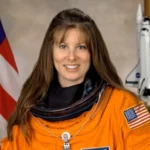
Tracy Caldwell Dyson
NASA (National Aeronautics and Space Administration), USA
Tracy C. Dyson was selected as an astronaut by NASA in 1998. The California native has a Ph.D. in Chemistry, and is a veteran of three space flights. Dr. Dyson has designed, constructed and implemented electronics and hardware for the study of atmospheric gas phase chemistry, and has developed and presented numerous papers on methods of chemical ionization for the spectral interpretation of trace compounds. In 2007, Dyson flew aboard the space shuttle Endeavor on STS-118, where she served as a mission specialist. In 2010, she served as flight engineer for Expedition 23/24. She has logged a total of 373 days in space, including over 23 hours in four spacewalks. Most recently, Dyson launched to the International Space Station on March 23, 2024, as a flight engineer on the Soyuz MS-25 spacecraft. Dyson spent six months aboard the station as an Expedition 71 flight engineer, conducting science experiments and maintaining the space station. It was her second long-duration spaceflight and third mission overall.
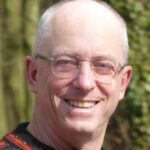
Mark van Loosdrecht, NAE
Delft University of Technology, Netherlands
Mark van Loosdrecht is a leading Dutch scientist and Professor of Environmental Biotechnology at Delft University of Technology, where he has held a chair position since 1999. Widely recognised for his pioneering work in microbial ecology and wastewater treatment, Prof. van Loosdrecht was instrumental in the development of technologies such as the Anammox® and Nereda® process (aerobic granular sludge). His research focuses on biofilms, resource recovery from wastewater, and nutrient removal. He has received numerous prestigious awards, including the Lee Kuan Yew Water Prize and Stockholm Water Prize. He is a member of the NL, USA and Chinese Academies of Engineering.
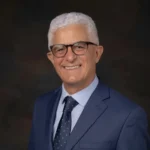
Menachem Elimelech, NAE
Rice University, USA
Menachem Elimelech is the Nancy and Clint Carlson Professor at Rice University, with joint appointments in the Department of Civil & Environmental Engineering and the Department of Chemical & Biomolecular Engineering. Professor Elimelech’s research focuses on membrane-based processes for energy-efficient desalination and wastewater reuse, brine management and valorisation technologies, and advanced materials for next-generation separation and water decontamination technologies. Professor Elimelech has received numerous awards in recognition of his research contributions. Notable among these awards are the 2005 Clarke Prize for excellence in water research; election to the US National Academy of Engineering in 2006; and the Eni Prize for ‘Protection of the Environment’ in 2015.

Amanda Lake
Jacobs, UK
Amanda Lake is a Chartered Chemical Engineer and Global Principal for Water Resource Recovery at Jacobs, where she also serves as Head of Carbon and Circular Economy for Water Europe. Based in Edinburgh, UK, she brings over 24 years of experience in the water sector across Australia and Europe. Her expertise focuses on wastewater treatment, decarbonisation, resource recovery, and circular economy solutions within the urban water cycle. Since joining Jacobs in 2008, Amanda has held senior leadership roles and is a recognised advocate for net zero and climate action in the industry.
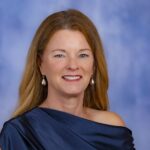
Amy Childress, NAE
University of Southern California, USA
Amy Childress is the Walt Singer Endowed Chair in Civil and Environmental Engineering and Director of the ReWater Center at the University of Southern California. Her research and scholarly interests are in the areas of wastewater reuse and desalination to address the global challenge of freshwater scarcity. Most recently, Dr. Childress has investigated membrane processes for innovative solutions to contaminant and energy challenges; conceptual analyses of synergistic configurations of shared/integrated facilities; morphological, mechanical, and interfacial aspects of membrane materials; and novel approaches for brine reduction and energy recovery. She has led multi-disciplinary research projects and has received awards for research innovation, publication impact, technology education, and mentoring. Dr. Childress chairs and serves on expert panels for potable reuse and seawater desalination projects in the United States and abroad. Dr. Childress is co-editor of Desalination and co-editor-in-chief of IWA’s Water Reuse.
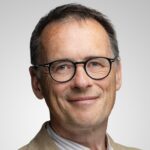
Christopher Gasson
Global Water Intelligence of Technology, UK
Christopher is an authority on water finance and markets. After a degree in politics and economics at Oxford University, he worked as a financial journalist and investment banker, before acquiring Global Water Intelligence in 2002. Since then he has built the business into the pre-eminent source of information on the global water industry with products including WaterData, DesalData, Water Desalination Report, and Ultrapure Water Micro journal. Additionally, he is responsible for events including the Global Water Summit, the American Water Summit, and the Produced Water Society seminars. Besides his involvement in GWI he is co-founder of the Global Water Leaders Group and Leading Utilities of the World.
Session Chairs
Meet some of our session chairs below:
Jörg E. Drewes
Technical University of Munich
Germany
Marc Deshusses
Gates Foundation
USA

Michael Wong
Rice University
USA

Delph Mak
Sand Technologies
Singapore, USA
Ana Soares
Cranfield University
United Kingdom

Scott Grieco
Jacobs Engineering Group
USA

Richard Lancaster
AtkinsRealis
UK
Lin Shihong
Rice University
USA
Jonathan Clement
Ramboll Water
Singapore

Menachem Elimelech
Rice University
USA

Shane Trussell
Trussel Technologies
USA
Mikel Duke
Victoria University
Australia
Mark van Loosdrecht
Delft University of Technology
The Netherlands

Michelle Young
Carollo Engineers
USA

Qilin Li
Rice University
USA
Aijie Wang
Chinese Academy of Science
China
Session Keynote Speakers
Meet our session keynote speakers below:
Paula Kehoe
Building Infrastructure Locally for Decentralized Water Systems (BILD)
USA
Bart de Gusseme
Ghent University
Belgium
Megan Plumlee
Orange County Water District
USA

Charles Hine
Waterwhelm
UK
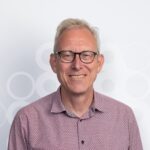
Henk Koops
NX Filtration
Netherlands
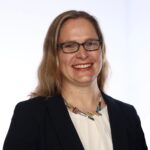
Eva Steinle-Darling
Carollo Engineers
USA
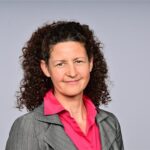
Tanja Rauch-Williams
Metro Water Recovery
USA
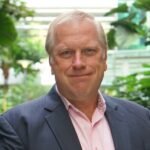
Shane Snyder
Georgia Institute of Technology
USA
Marc Deshusses
Gates Foundation
USA
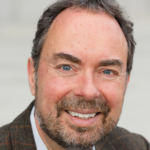
Detlef Knappe
North Carolina State University
USA
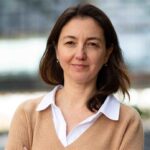
Lina Sela
University of Texas at Austin
USA
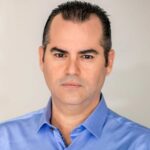
Tomer Efrat
IDE Technologies
Israel
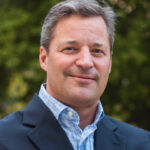
Eric Hoek
University of California, Los Angeles
USA

Prachi Salekar
Black and Veatch
USA
Amber Boone
South Orange County Wastewater Authority
USA
John Follin
General Atomics
USA
Call for content – poster submissions still open!
LET 2026 Themes
The IWA Leading Edge Conference on Water and Wastewater Technologies is designed to be the place for sharing the latest insights into how pioneering science, technological innovation and leading practices will shape the major transformation in water management that is underway.
Joint Drinking Water and Wastewater Themes
- PFAS Mineralisation Technologies for Drinking Water, Wastewater, Sludge and Brine Treatment
- Developments in Digitalisation, Automation and Artificial Intelligence
Drinking Water Themes
- Advances in Membrane Technologies and Multifunctional Hybrid Systems
- Desalination, Decreasing Energy Requirements & Brine Management
- Closing the Water Cycle Towards Direct Potable Reuse
Wastewater Themes
- Pushing the Limits: Ultra-low Nutrient Discharges and Intensification in a Constrained Future
- Modular and Decentralised Treatment
- Advanced Solids and Wastewater Management for Energy-Neutral Treatment Plants